Display, Identity, and Otherness
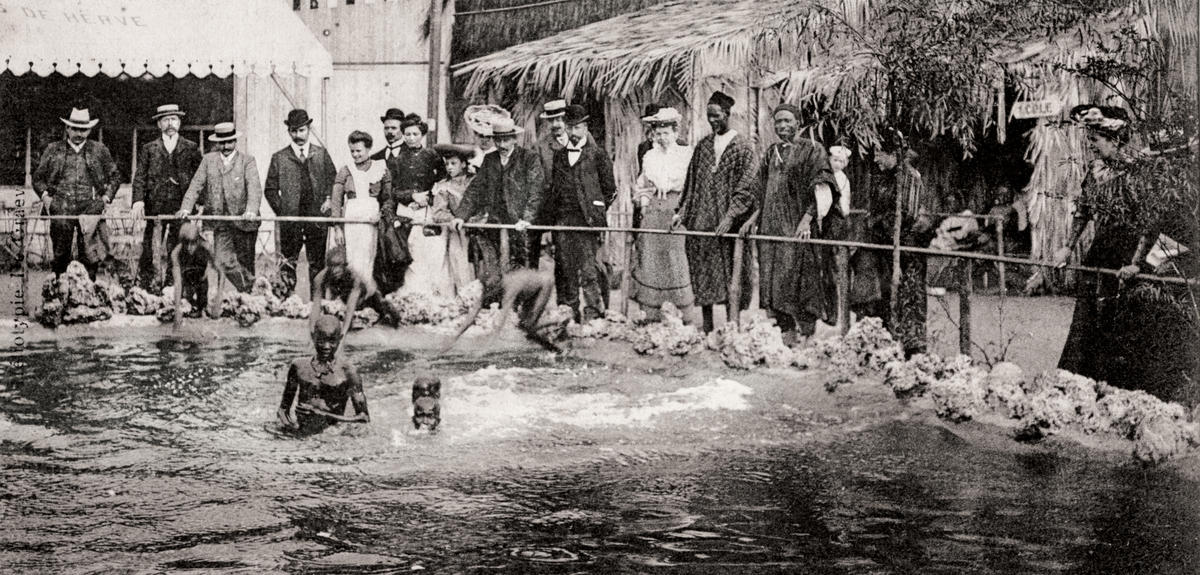
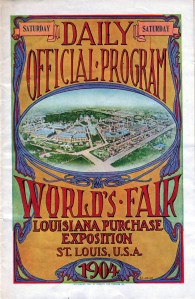
The Louisiana Purchase Exposition in 1904 and the Madrid Exposition in 1887 were manifestations of the countries’ both territorial and acculturate accomplishments that stood vital to the stabilization of the countries’ being the leading imperial forces. These were massive events overwhelmed with ‘prizes’ they won all around the world. Expositions peaked around the 19th and 20th centuries to underscore the growing western nationalism and colonialism.
Colonialism thrives on the culture of othering or simply the awareness of the being ‘in-relation to’ something. And the act of display has basically activated this actuality. By putting something on display, it is notably a separate level from the viewers. It becomes the subject or discourse, critique, and in some cases, comic. These expositions provided the distinction of a ‘subject’ and an ‘object’ of colonialism. However, we will see in the latter part of this paper, in the discussion of Bennett’s article, on the possibility of such distinction to overlap. These expositions caused the reinforcement of the otherness of the colonizers and the colonized.
This ‘otherness’ has been tackled by quite many philosophers. Edward Said in his book, ‘Orientalism’ (1978) iterates “Western style for dominating, restructuring, and having authority over the Orient” (CourseHero) which is through situating itself as the center of civilization and basically, the advanced race as to which other races and cultures are seen inferior and as “the Other”. Everything is in relation to the West. This was a major justification of Western imperialism. ‘White man’s burden’ as it is popularized. Ironically, the ‘backwardness’ of a different race is the perfect opportunity to bring the Western race forward.
In Black Skin, White Masks (Peau noire, masques blancs) in 1952 by French psychiatrist and philosopher, Frantz Fanon, introduces the degrading culture of the colonial gaze and that ‘colonialism is a total project. It is a project that does not leave any part of the human person and its reality untouched’ (Stanford Encyclopedia of Philosophy) Essentially, to display something, regards it as subject to the violent gaze of what is not it. The colonial gaze, for Fanon, will always hold ‘whiteness’ possessing the upper hand.
Display as a colonial tool also talks about the total ownership of the colonizer of the colonized. Display is already a fixed actuality of possession. It is treasure acquired and shown off. The thing about being the subject of display is that you are who they make you to be. Your identity turns into something cosmetic. An example would be Antonio Buangan’s findings on his ancestors. It was challenging tracing back the individuals brought to St. Louis for the Louisiana Purchase Exposition in 1904. A key part of this difficulty was that the names of the people shipped there were either inaccurate or did not exist at all. They existed only as Igorot people of the Philippines. The unimportance of names mirrors how their individual identities did not matter as much as what they represented. As a people that regard names as more than just a simple address, one that is requisite in rituals and ceremonies – of which too, are compromised by the boundaries of display and exhibition. Take for example, the ritual of the funeral feast. Although, they were allowed to perform it but without the smoking of the body over slow fire. We see here a disregard for the significance of the ritual. The ritual has been modified and consequently, had a great impact on the people’s identity. Being able to do the ritual in incompleteness, though was an active effort to stay true to their identity as a whole, it also showed a sort of submission to the imperialist. Identities, therefore, unconsciously become more representational than authentic. Incorporating French sociologist Jean Baudrillard’s frame, this no longer is a scanty simulation but is a perversion of their cultural practice so much so that at worst, everything becomes a simulacra; representing what no longer exists. The experience becomes a cut-out identity that is pleasing to the colonizer. In the end, colonization is subjugation. Frantz Fanon on colonized identification writes:
“The colonizer projects what we might call identification’s “alienation effect” onto the colonized, who is enjoined to identify and to disidentify simultaneously with the same object, to assimilate but not to incorporate, to approximate but not to displace. Further, in attempting to claim alterity entirely as its own, the Imperial Subject imposes upon all others, as a condition of their subjugation, an injunction to mime alterity. The colonized are constrained to impersonate the image the colonizer offers them of themselves; they are commanded to imitate the colonizer’s version of their essential difference.” (Fuss, p.24)
It is important to note though, that when something is placed on display, it does not necessarily restrict meanings and ideas. Ironic enough, it breeds ideas through discourse. Let us take for example the Philippine Exhibition in Madrid in 1994. Display allowed critique not only of what is colonized. Instead, by looking closer, the çolonized’, which is more often than not the subject of the display does not necessarily become the object of it. The paintings with exception to works by Luna and Hidalgo, and wood carvings that were displayed were found clumsy and just not at par with the expectations of the Spaniards spoke of the condition of education in the Philippines. What better way to demonstrate this purely than the fine arts as it is the ‘most sublime expression of [the] human spirit’ (Gomez, p.284) and thus, nothing can easily dismiss and invalidate it.
If speaking a language means participating in a world and adopting a civilization, then the language of the colonized, a language imposed by centuries of colonial domination and dedicated to the elimination or abjection of other expressive forms, speaks the world of the colonizer. To speak as the colonized is therefore to participate in one’s own oppression and to reflect the very structures of your alienation in everything from vocabulary to syntax to intonation. (Stanford Encyclopedia of Philosophy)
An interesting argument is that voluntary participation in displays (as a colonial tool) such as in the case of the Suyoc kin, coming home from that unique experience and maybe even also the case of the artworks in the exposition in Madrid effectively relaying the incompetence of the religious order to educate the ‘primitive’ – looking at it in this angle, does this submission to being displayed, reduces the colonial power? In this scenario, does the resplendent nature of the exposition, of the display, diminish?
The Exhibitionary Complex
In T. Bennett’s ‘The Exhibitionary Complex’ , he reinforces the expositions stated because the purpose of museums (and expositions) is to flaunt. It is, by its nature, upscale. In his article, Bennett is much influenced by the ideology of French philosopher, Michel Foucault, especially on knowledge and power. Institutions such as the museum, fortify their omnipotence through what Foucault asserts in his book ‘Discipline and Punish’ , that ‘…observation and the gaze are the key instruments of power’ (Sparknotes). Depending on which side of the power one belongs in, whether you are a spectator or a display, you are not only literally confined to act the way you do but also are conditioned to act the way you do. Everything, not even the space, is as democratic as we perceive it to be – how we are actually given direction on how to go about the space and the etiquette we must follow.
Meanwhile, the Panopticon model Foucault also applies. When one is in a museum or an institution similar, there is that universal feeling of being observed and watched and so, actions following etiquette are measured. You do not simply enter a space when you enter the museum. As you enter the museum, you have consented to be its subject and object. Unknowingly, you are hegemonized.
Relating this to Italian philosopher Antonio Gramsci’s ideology of ‘cultural hegemony’, and how ideas reinforce or undermine existing social structures and the power struggle of dominant groups [institutions] and ‘the relative cultural autonomy of subordinate groups whom they victimize.’ (Lears, p. 568). Fundamentally, this means that a ruling class or in this case, a domineering structure as an institution, manipulates the subordinate class – in this case, the museum spectators. And for Gramsci, ‘consent and force, nearly always coexist, though one or the other predominates’.
Expositions
World fairs or world expositions to this day aim to showcase the progress and development of countries. They are typically held every five year. These are global gatherings brought about by innovation and metamorphosis. This year’s World Expo is hosted by Dubai with the participation of 192 countries. ‘The concept was for each country to be set up under one of three themes – Sustainability, Mobility or Opportunity – and use that theme to highlight its achievements’ (news.com.au). Because of the Covid-19 pandemic, the 2020 Expo is postponed to October of this year to March 2022.
These exhibitions did not suddenly appear in the late 19th century—they were in fact following a long tradition.
Gilles Boëtsch, director of the UMIESS
One of the developments of World Expositions is the eradication of the ‘human zoo’. Such practice would definitely have to answer to laws dedicated to human rights and against human trafficking. Since the late 1920’s World’s fairs have been governed and regulated by the Bureau International des Expositions (BIE), a Paris-based organization. Its objective being exposition scheduling and ‘to make clear the rights and responsibilities of the host city and participants.’ (Britannica)
In Paris 1925, arose what is called the ‘Art Deco’ movement. Derived from the Exposition Internationale des Arts Décoratifs et Industriels Modernes, this movement was about sophisticated modernism, decorative arts, fashion and architecture.
World Fairs became instruments of optimism and hope. The Century of Progress Exposition in Chicago (1933–34) and the New York World’s Fair (1939–40) were examples of this. The expositions aimed to uplift the people’s spirit in spite of The Great Depression.
Despite, the development of technology changing the spectator count on World Fairs such that everything is much more accessible on gadget screens, The expositions are now more than showing off one’s nation’s progress but becomes a ground for discourse and collaboration of participating (and non-participating) countries to discuss and find solutions and agreements on relevant world issues. Some examples are:
Fairs since 1970 have tended to enlighten visitors about a particular theme, often environmental in nature, rather than celebrate a historical anniversary or a colonial empire. Many were smaller fairs held in smaller cities: Spokane, Washington, U.S. (1974), with a general environmental theme; Okinawa, Japan (1975–76), on the oceans; Knoxville, Tennessee, U.S. (1982), on international energy issues; New Orleans (1984), on rivers; Tsukuba, Japan (1985), on housing; Vancouver, British Columbia, Canada (1986), on transportation and communications (Britannica)
Therefore, we can say that it is now a conversation, a dialogue of the course of action towards the future. It does not demand subjugation and submission but instead, radicalization to give birth to solutions. In other words, world fairs have grown from the shadow of imperialism to a more balanced power relation towards a humanistic, noble path and hopefully, it continues.
Works Cited
Drabinski, John. “Frantz Fanon.” Stanford Encyclopedia of Philosophy, Stanford University, 14 Mar. 2019, plato.stanford.edu/entries/frantz-fanon/.
Fuss, Diana. “Interior Colonies: Frantz Fanon and the Politics of Identification.” Diacritics, vol. 24, no. 2/3, 1994, pp. 20–42. JSTOR, http://www.jstor.org/stable/465162. Accessed 26 Feb. 2021.
“Modernism and Cold War Rivalries.” Encyclopædia Britannica, Encyclopædia Britannica, Inc., http://www.britannica.com/topic/worlds-fair/Modernism-and-Cold-War-rivalries.
“Orientalism Introduction Summary.” Course Hero, http://www.coursehero.com/lit/Orientalism/introduction-summary/.
Person. “Australia Unveils Spectacular Dubai World Expo Pavilion.” NewsComAu, News.com.au, 24 Feb. 2021, http://www.news.com.au/travel/destinations/middle-east/australia-unveils-spectacular-dubai-world-expo-pavilion/news-story/670a41c301859104f40993c12cd4c58a.
SparkNotes,SparkNotes,www.sparknotes.com/philosophy/discipline punish/summary/
T. J. Jackson Lears. “The Concept of Cultural Hegemony: Problems and Possibilities.” The American Historical Review, vol. 90, no. 3, 1985, pp. 567–593. JSTOR, http://www.jstor.org/stable/1860957. Accessed 26 Feb. 2021.
“Why Museums Are Important: The Exhibitionary Complex.” The Keystone Journal, 3 May2013, thekeystonejournal.wordpress.com/2013/04/15/why-museums-are-important/#_ftn1.
References
Bennett, Tony. The Birth of the Museum: History, Theory, Politics, Routledge, 1995, pp. 59–88.
Buangan, Antonio S. “The Suyoc People Who Went to St. Louis 100 Years Ago: The Search for My Ancestors.” Philippine Studies, vol. 52, no. 4, 2004, pp. 474–498. JSTOR, http://www.jstor.org/stable/42634962. Accessed 26 Feb. 2021.
Name. “L’art D’être · Laureen Andalib.” L’art Dtre Laureen Andalib, blogs.cornell.edu/laureenandalib/2015/10/22/on-simulacra-and-simulations-jean-baudrillard/.
Silva, John L. “Little Brown Brothers’ St. Louis Blues: The Philippine Exposition, 1904 St. Louis World’s Fair – Positively Filipino: Online Magazine for Filipinos in the Diaspora.” Positively Filipino | Online Magazine for Filipinos in the Diaspora, Positively Filipino | Online Magazine for Filipinos in the Diaspora, 7 June 2013, http://www.positivelyfilipino.com/magazine/2013/6/little-brown-brothers-st-louis-blues-the-philippine-exposition-1904-st-louis-worlds-fair.
“The Largest Human Zoo in World History: Walter Johnson.” Lapham’s Quarterly, http://www.laphamsquarterly.org/roundtable/largest-human-zoo-world-history.
 Tales & Reckonings