Lao Tzu once said,
“Life is a series of natural and spontaneous changes. Don’t resist them; that only creates sorrow. Let reality be reality. Let things flow naturally forward in whatever way they like.”
This comes to mind as I look at JC Jacinto’s works. By highlighting the transformations of what we consider as the mundane, we see its intrinsically, majestic call to life.
JC Jacinto (b. 1985) is a Filipino artist who is known for his paintings and other mediums that allow people to appreciate nature’s violent, destructive, and extravagantly riveting rites of passage.
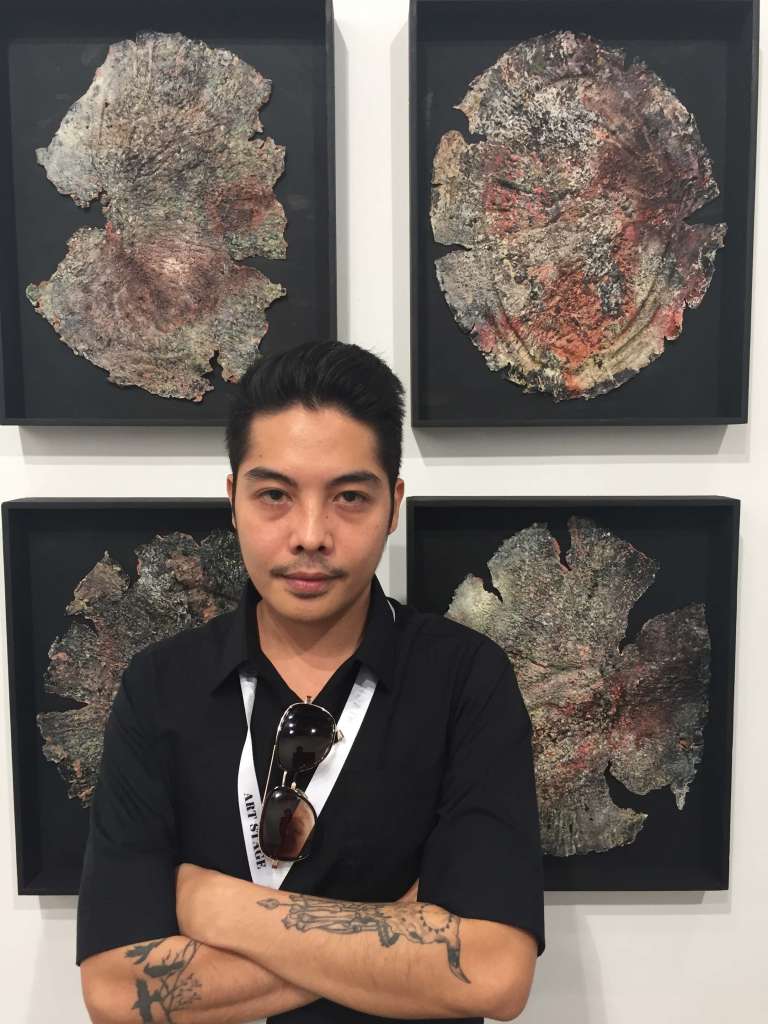
Image from philstar : “Filipino artists take stage at Singapore Art Week”
Jacinto graduated from the University of Philippines-Diliman with a major in painting. In 2014, he completed his residency in the Abu Dhabi Art Hub. Since those earlier years, Jacinto had set up several solo exhibitions.
His latest exhibition, I Skip Stones Across Eons, is currently up at artinformal Makati. It will be up until December 21, 2019. Jacinto is also set to have an exhibition in January 2020, The Arrow That Pierced Time, at the Taipei Dangdai International Art Fair.
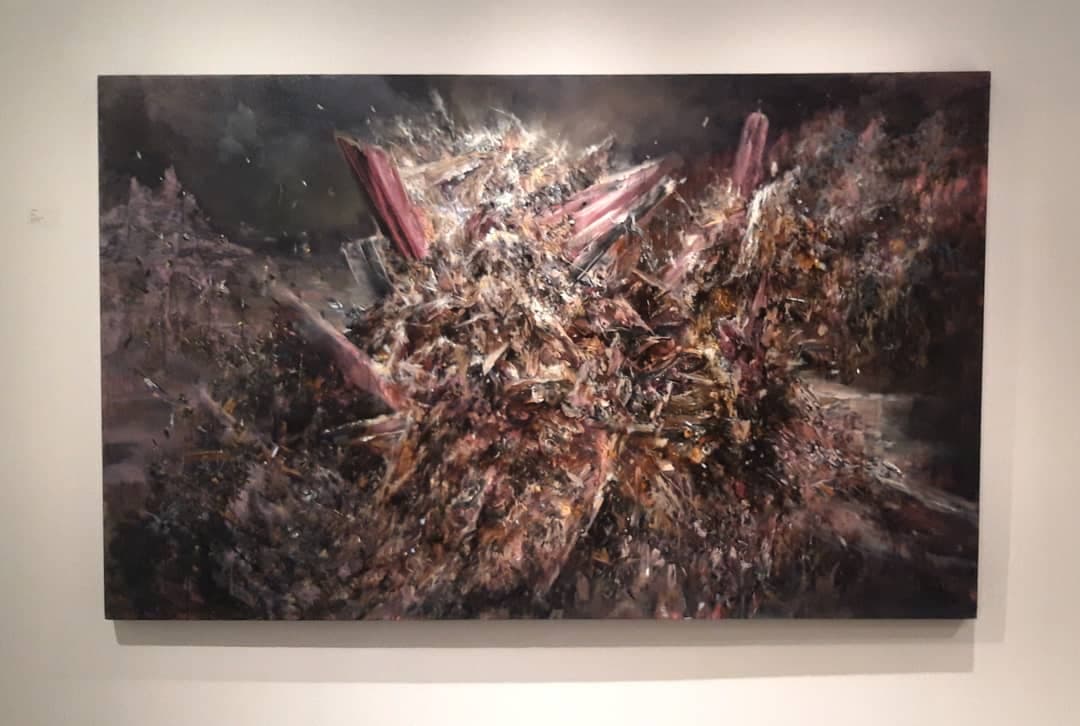
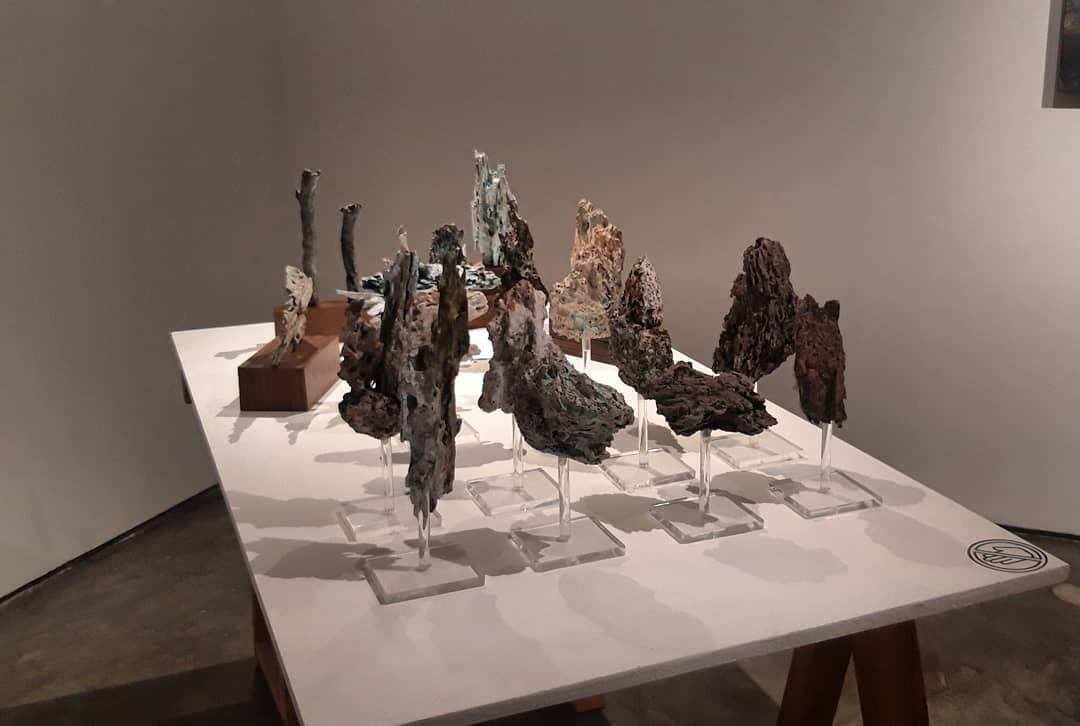
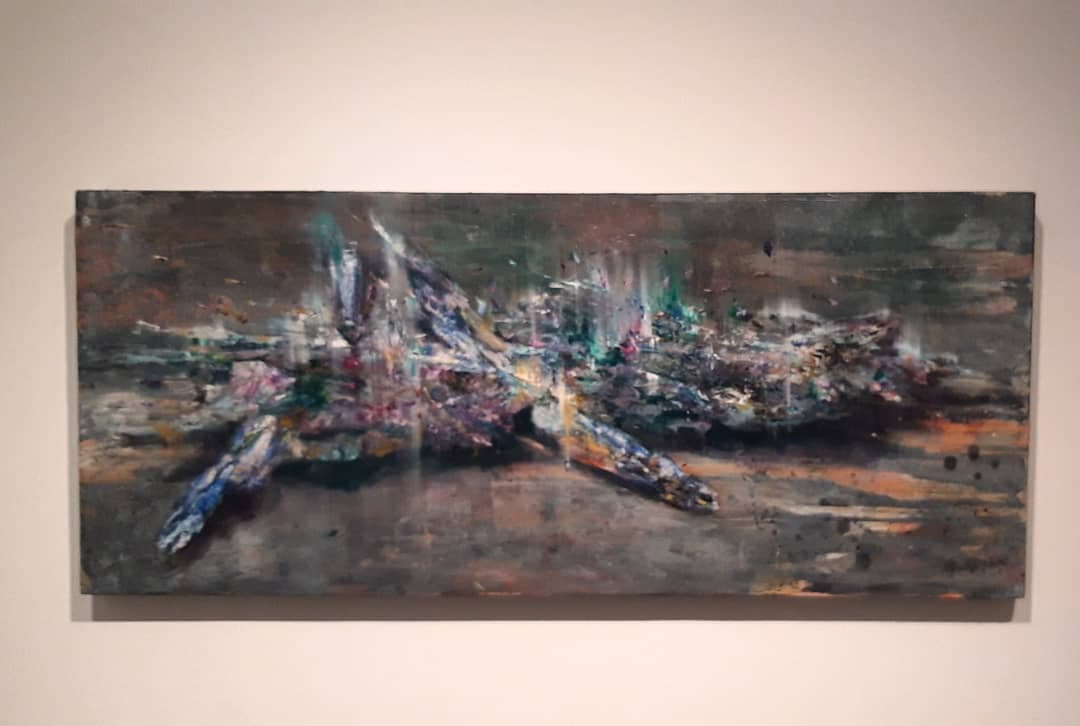
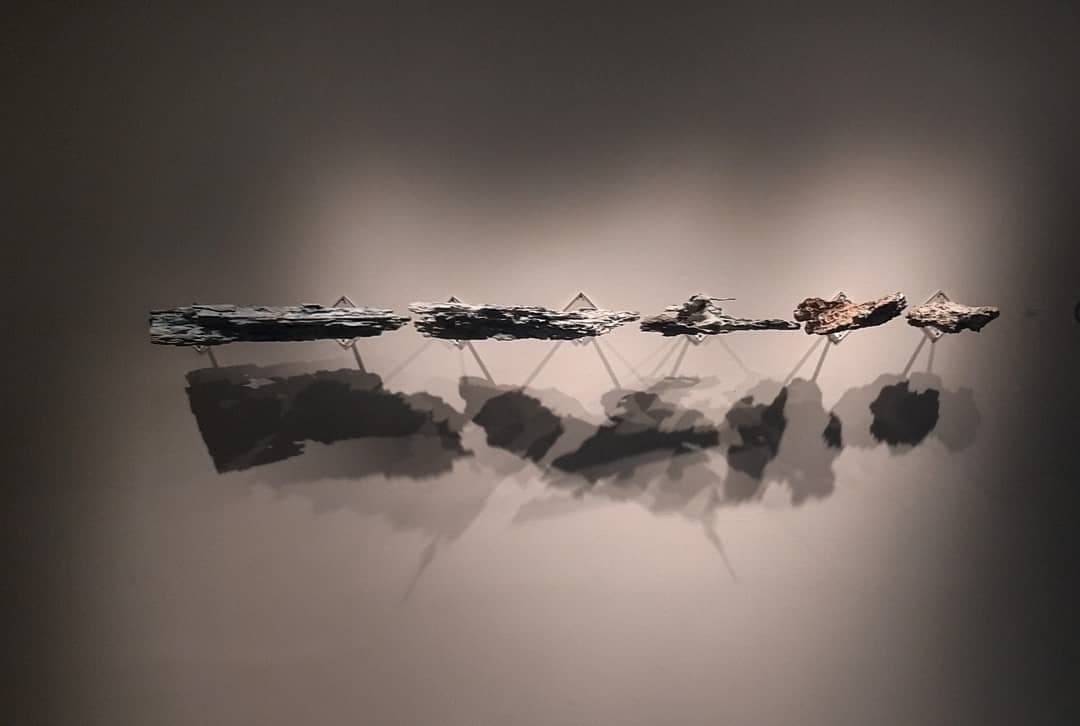
Some works from I Skip Stones Across Eons at artinformal Makati
Just as the art he demonstrates, Jacinto puts a shoe forth in saying that the artist he is today is the culmination of all the grounding he has had from years of experience honed by synthesis of achievements and his countless failures. “I’m a product of everything from my past and my present”, Jacinto shares.
When asked about a defining moment or such that pushed him to pursue art, he explains it as more of a parallel of basic human nature and how when we are faced with struggle, we have the tendency to gravitate to the thing we seek comfort in; for Jacinto, it was making art. Making art was his way of grappling and surviving. In his words, “The passion became a remedy, the remedy turned into a driving force, the driving force became my life.”
Jacinto’s art features the astonishing weaving of the past, the present and the future. The unconcealment of the interconnections of man and nature in Jacinto’s works and in enabling us to see the world as a cosmos, makes his works so avidly compelling.
Aside from the interconnections, Jacinto also iterates how we do not see enough our smallness compared to nature and how much we take for granted for what is around us and how that creates a sort of detachment or a gap. His works let people see how unfamiliar we are with the familiar and that art can be one way to resolve that.
Unsurprisingly though, before delving into this medium comprised mostly of rocks, branches, and minerals, he painted mostly. And had been quite famed as someone who enjoys the destruction of his own creations and in earlier interviews shares that he liked practicing the power destruction gives him.
However, Jacinto explains that maybe back then it felt that way but it was never about stroking his ego, rather it was about freedom. Looking back and learning more about himself, he actually finds it “senseless and masturbatory”.
He explains further saying that right now “…it is about the freedom to being able to make mistakes and enjoy the struggles of finding ways to correct those mistakes, the freedom of not being confined within a set of rules and still make it work” Aware of his indecisiveness and constant dissatisfaction with his works, he now works around that and is eased that destruction is innate and that it is not the product. Creation is, after all, more of than not, sacrificial.
Jacinto’s fascination of nature has helped him remain grounded and optimistic in its ways; there is always something to learn and understand. By the simple act of observation, one is both a subject and an object; a subject of information and an object of insight.
As human beings, we may have our limitations but nature provides us with endless mysteries to seek and appreciate within the passage of time and remarkably, Jacinto situates his art as an installation that gives our human finitude a rare chance to have a grasp of what, naturally, is an infinite transformation of nature. He has been experimenting with wood petrification and using chemical concoctions that mimic and or induce the colors and textures earthly processes make such as seen in I Skip Stones Across Eons ; “Wood Mineralization Experiment 1”.
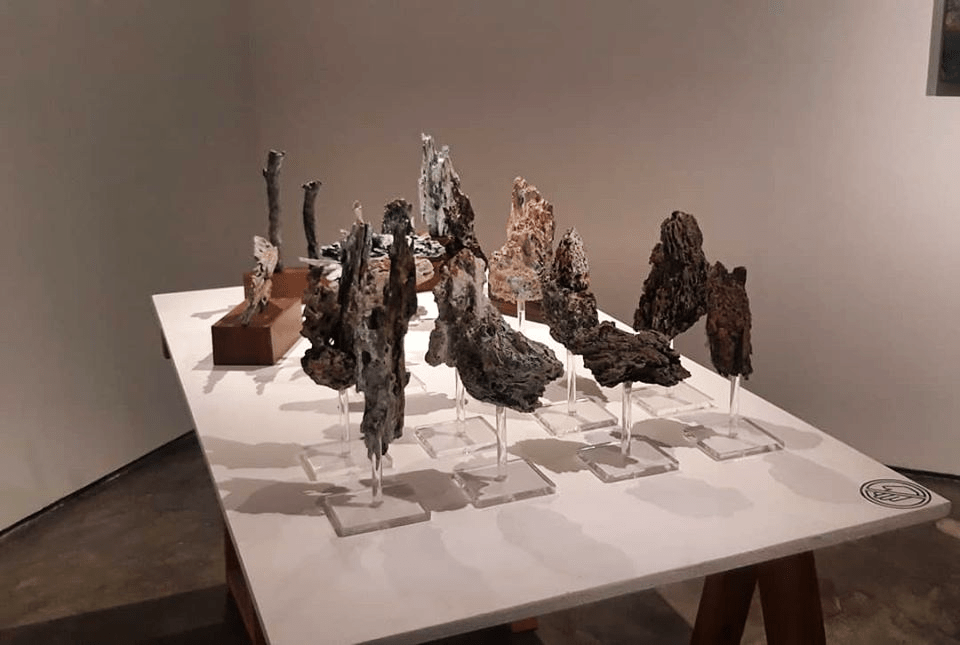
When asked on his advice to fellow young artists, he encourages them to be passionate about learning and as art being their language, it is important to make sure they say something worth listening to. Constantly assessing one’s strengths and weaknesses is integral; dropping the weaknesses if you have to and to take full advantage of your strengths.
Being genuine and staying true to one’s self will reflect on the art you create. Although, there will always be someone better at what you do, your sincerity and personal knowledge will be your basis of uniqueness. And when you feel lost or find a lack for motivation, don’t force it. Look somewhere else and you may actually just stumble upon it.
In the end, it all boils down to knowing that you are your worst enemy and that it is in facing up to this challenge, removing all expectations that weigh upon you, no matter how difficult this may be, is the key to growth. You grow as a person and as an artist.
 Tales & Reckonings